May 30, 2026
The Enterprise AI Operator Is Emerging
For years, enterprise organizations operated through clearly separated functions.
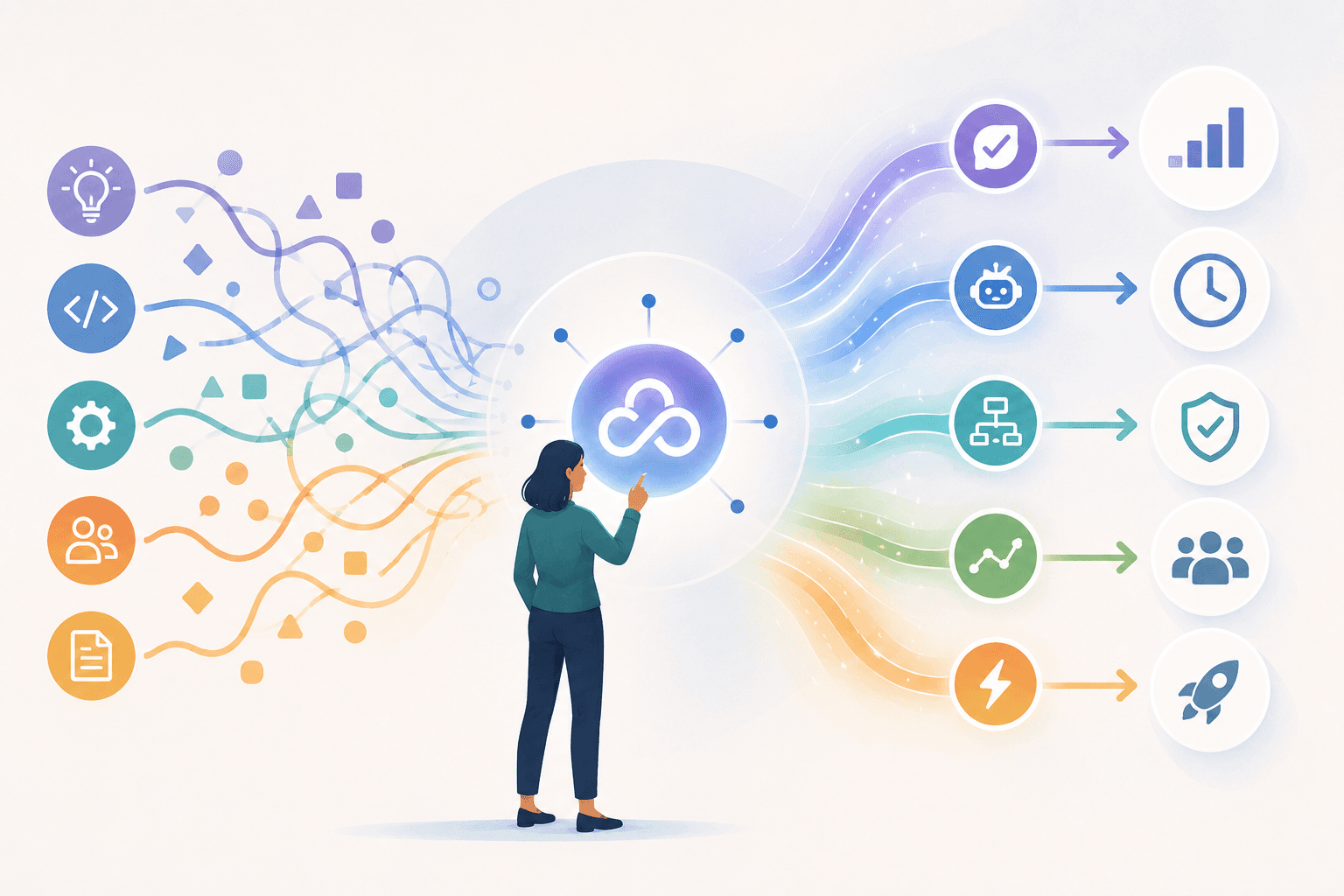
Product teams defined systems. Engineering teams built systems. Operations teams coordinated workflows. Editors, analysts, or business users executed work inside those systems.
AI is beginning to blur these boundaries.
A new type of role is quietly emerging inside modern organizations: the enterprise AI operator.
Not purely a product manager. Not purely an operations lead. Not purely an engineer.
But someone responsible for designing, coordinating, and optimizing AI-native operational systems.
AI Changes the Nature of Operational Work
Historically, operational scale depended heavily on people.
As organizations grew, they added:
coordinators
project managers
QA layers
operational specialists
workflow administrators
reporting teams
approval systems
This created organizational complexity, but it was manageable because production capacity scaled relatively slowly.
AI changes this dynamic entirely.
Organizations can now generate:
content
code
workflows
documentation
metadata
support outputs
operational actions
at speeds traditional organizations were never designed to coordinate.
This creates a new challenge: someone must design systems capable of operationalizing AI-driven throughput safely and efficiently.
The Old Organizational Model Starts Breaking Down
Most enterprise organizations were built around the assumption that humans remain deeply involved in operational coordination.
Humans:
routed work
validated outputs
monitored workflows
enforced requirements
escalated failures
tracked ownership
coordinated dependencies
As AI systems absorb more of this work, organizations increasingly need people who understand:
workflow architecture
operational systems
automation logic
AI capabilities
observability
exception management
orchestration design
This is not purely engineering.
And it is not purely operations.
It is an emerging hybrid discipline.
The Enterprise AI Operator Designs Operational Intelligence
The role of the enterprise AI operator is not simply to use AI tools.
It is to design environments where AI can operate effectively.
That includes:
workflow orchestration
operational governance
validation systems
automation architecture
escalation logic
system coordination
AI integration strategy
operational observability
throughput optimization
In many organizations, these responsibilities are currently fragmented across multiple teams.
Over time, they will likely consolidate into more specialized operational leadership roles.
The Most Important Skill Becomes Systems Thinking
As enterprises become increasingly AI-native, one skill becomes disproportionately valuable: systems thinking.
Not just: “How do we automate a task?”
But:
How does work move through the organization?
Where are coordination bottlenecks?
Which operational dependencies create fragility?
How should workflows adapt dynamically?
Where should humans remain involved?
Which validations should become autonomous?
How do systems maintain reliability at scale?
These are operational architecture questions.
And they are becoming central to enterprise strategy.
AI-Native Organizations Require Operational Designers
Many organizations are currently approaching AI tactically.
They experiment with:
copilots
assistants
prompts
automation tools
productivity layers
But AI-native organizations will increasingly require something deeper: intentional operational design.
Because eventually, AI-generated throughput overwhelms traditional coordination structures.
Organizations that fail to redesign workflows around AI will experience:
operational instability
workflow fragmentation
governance failures
scaling inefficiencies
increasing coordination overhead
AI alone does not solve these problems.
Operational architecture does.
Product Management Is Beginning to Change
This shift is especially important for product and platform teams.
Historically, enterprise product management often focused on:
features
interfaces
roadmaps
integrations
requirements
Increasingly, enterprise product work expands toward:
operational orchestration
workflow intelligence
systems coordination
automation governance
observability design
AI operationalization
The product itself becomes less static.
It becomes an active operational environment.
Organizations Will Need Fewer Coordinators, But Stronger Operators
One of the long-term implications of AI-native operations is organizational compression.
Many repetitive coordination functions will likely shrink over time:
manual routing
repetitive QA
operational tracking
status management
workflow monitoring
process enforcement
But this increases demand for people capable of designing and supervising intelligent operational systems.
The organizations that scale effectively will not simply eliminate operational roles.
They will evolve them.
The Future Enterprise Team Looks Different
Over time, enterprise organizations may increasingly consist of:
smaller operational teams
stronger infrastructure
more autonomous workflows
AI-native coordination systems
exception-based human oversight
continuously adaptive operational environments
This changes how organizations scale entirely.
The limiting factor becomes less about headcount and more about operational architecture quality.
Final Thought
AI is not simply introducing new tools into enterprises.
It is creating entirely new operational challenges and organizational models.
And as workflows become increasingly autonomous, enterprises will need people capable of designing systems where humans and AI operate together effectively.
That role is still emerging.
But over time, the enterprise AI operator may become one of the most important roles inside modern organizations.